

11 Boat Condition Warning Signs to Watch

That glossy sunset photo means very little if the boat that shows up at the dock is tired, poorly maintained, or not as advertised. For travelers booking a day on the water, boat condition warning signs are rarely dramatic. More often, they show up in small details that signal how seriously an operator treats maintenance, safety, and guest experience.
This matters more than most vacationers realize. A boat does not need to look neglected to have expensive problems hiding underneath a polished listing. And on a charter, poor condition is not just about aesthetics. It can affect comfort, reliability, cleanliness, noise level, and, in the worst cases, safety. If you know what to look for before you book, you are far less likely to end up paying premium pricing for a subpar vessel.
Why boat condition warning signs matter before you board
A well-kept charter boat usually reflects a well-run operation. Owners and crews who stay on top of engines, electrical systems, upholstery, safety gear, and cosmetic care tend to be more consistent across the board. They communicate better, present the boat honestly, and deliver a smoother guest experience.
The reverse is often true too. When basic upkeep is slipping, it is fair to ask what else is being overlooked. Maybe it is harmless wear on an older boat that still runs beautifully. Or maybe it is a sign of deferred maintenance, rushed cleaning, or an operator cutting corners. The point is not to reject every vessel with a scratch. The point is to tell the difference between normal use and neglect.
1. The listing photos feel polished, but not current
One of the clearest boat condition warning signs appears before you ever speak to anyone. If every image looks professionally edited, tightly cropped, or suspiciously free of wear, ask when those photos were taken. Boats age fast in saltwater environments, especially under heavy charter use.
A reliable operator should be able to confirm that the photos reflect the boat's current condition. If they avoid the question, send only a few glamour shots, or keep repeating the same angles, be cautious. Outdated photos are often used to sell a version of the boat that no longer exists.
2. Upholstery and seating show heavy wear
Guests notice seating immediately. Cracked vinyl, stained cushions, loose seams, flattened padding, and mismatched replacements all point to deferred cosmetic upkeep. On a private charter, that affects the entire feel of the day. What looked elegant online can feel tired in person very quickly.
This is not just about appearance. Worn seating can suggest high use without proper reinvestment, which raises fair questions about other systems you cannot see as easily. A pristine engine room with tired cushions is possible, but in most charter operations, maintenance standards tend to cluster together.
3. Deck surfaces look dirty, chalky, or poorly repaired
Look closely at visible deck areas in photos or videos. Faded fiberglass, grime in non-skid surfaces, patched spots, and rough repairs can all indicate a boat that is being maintained reactively rather than properly. Cosmetic wear is normal on working boats, but there is a difference between honest use and obvious neglect.
Poor deck condition can also affect comfort. Guests barefoot on hot, rough, or dirty surfaces will feel that quality gap right away. On a premium charter, details like this matter because they shape the onboard experience from the first step.
4. Rust and corrosion are visible in guest areas
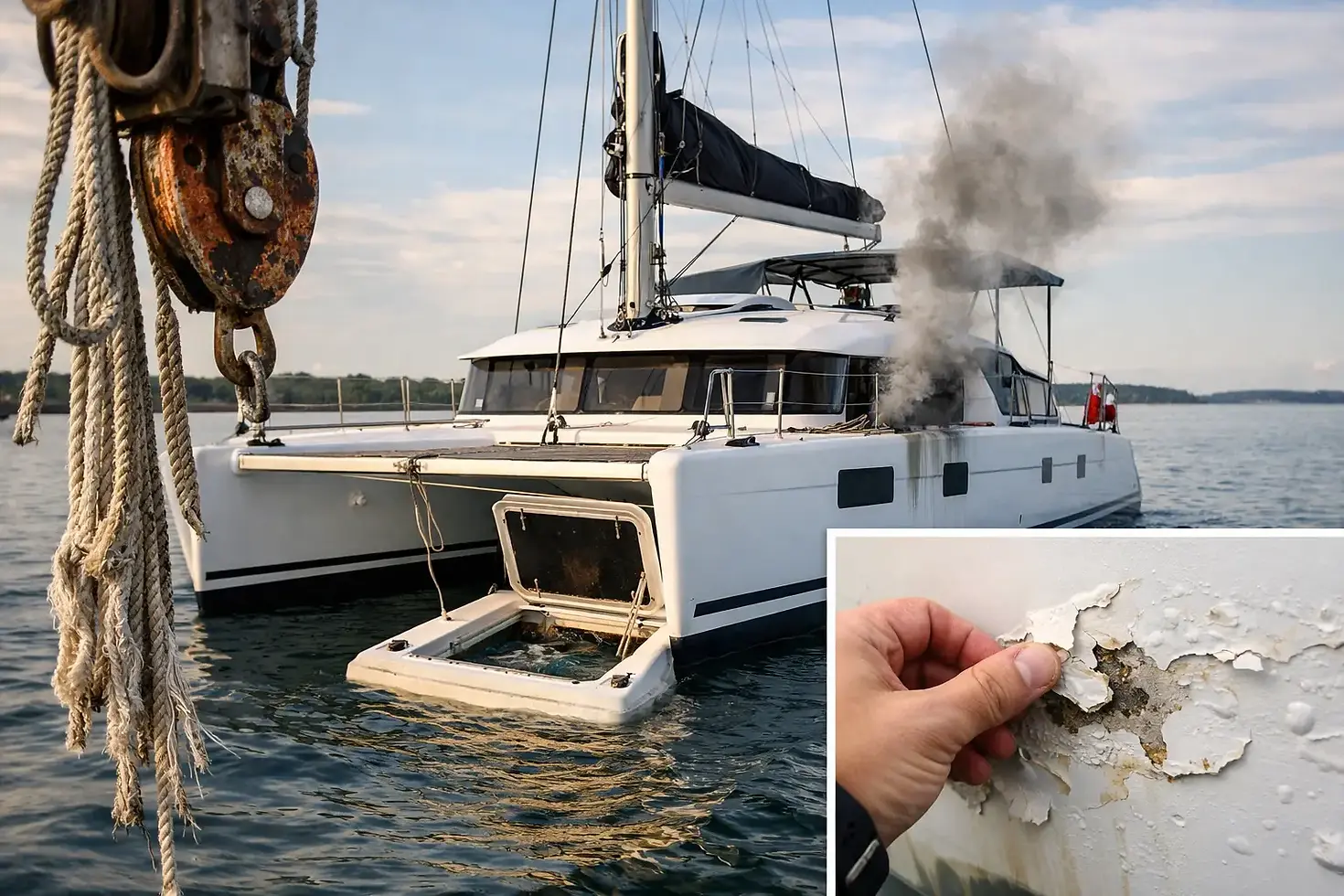
A little corrosion in a marine setting is common. Excessive corrosion is not. If you can already spot rust on hinges, railings, cup holders, ladders, cleats, or hardware in listing photos, that is a concern. Salt air is unforgiving, and hardware condition says a lot about routine care.
Corrosion in guest-facing areas matters because those are the easiest parts of the boat to clean and monitor. If they are being ignored, it is reasonable to wonder how the less visible systems are being handled.
5. The bathroom or cabin is barely shown
When a listing avoids the head, cabin, or interior spaces, there is usually a reason. Charter operators know guests care about bathrooms, shade, seating, and overall comfort. If those areas are missing from photos, ask to see them.
A small cabin on a day boat is not a problem. A dark, damp, cluttered, or poorly ventilated one is. The same goes for the bathroom. Cleanliness, odor control, and basic condition all reveal whether the operator is thinking like a hospitality business or just trying to fill dates.
6. Safety equipment is vague or glossed over
Luxury and safety should never be presented as separate categories. If an operator is unclear about life jackets, radio equipment, fire extinguishers, first-aid supplies, navigation electronics, or crew qualifications, treat that seriously. You do not need a technical lecture, but you should get direct answers.
This is one area where polished marketing can distract from weak standards. A beautiful boat with vague safety language is not a premium experience. It is a gamble dressed well.
7. The boat looks crowded for the advertised guest count
Capacity numbers can be misleading. A boat may be legally permitted for a certain number of people, but that does not mean it feels comfortable at that number. If the layout already looks tight in photos, imagine coolers, bags, towels, and people moving around during the trip.
Condition plays into this more than people expect. Boats pushed hard at max capacity over and over often show wear faster, especially in upholstery, flooring, and bathroom areas. If you are booking for comfort, not just legality, ask what guest count actually feels right on that vessel.
8. There are signs of temporary fixes instead of proper upkeep
Some repairs are part of normal boat ownership. What you do not want to see is a pattern of makeshift solutions. Loose canvas, peeling caulk, visibly patched upholstery, exposed wiring, misaligned doors, taped handles, or uneven paint touch-ups can indicate an owner who postpones proper maintenance.
One temporary fix does not condemn a boat. Several of them together usually tell a clearer story. In charter work, repeated shortcuts tend to show up in the guest experience sooner or later.
9. Reviews mention breakdowns, substitutions, or surprises
Customer feedback often reveals the things photos hide. Pay special attention to reviews that mention a different boat than expected, equipment not working, last-minute changes, cleanliness issues, or features that were advertised but unavailable. A single complaint may mean very little. A pattern means a lot.
Read the tone, not just the star rating. Some guests are easygoing and still leave a positive score after a frustrating experience. If the written comments repeatedly describe the boat as older than expected, less clean than pictured, or not worth the price, believe the pattern.
Boat condition warning signs in communication
Sometimes the strongest warning signs are not on the boat at all. They show up in how the operator answers questions. Evasive replies, inconsistent details, delayed responses, and pressure to book fast without clarity usually point to a business that does not welcome scrutiny.
By contrast, quality operators are comfortable discussing the boat honestly. They can explain what has been updated, what the layout is like, how the day runs, and whether the vessel is the right fit for your group. Good communication does not guarantee perfect condition, but poor communication often predicts disappointment.
Questions worth asking before you commit
Ask when the listing photos were taken, whether the boat has had recent upgrades, and what guests typically love or complain about. Ask how many people the boat comfortably fits, not just the legal maximum. Ask about restroom condition, shade coverage, boarding ease, and whether all advertised amenities are currently operational.
The answers should sound straightforward, not rehearsed. If every question gets a sales-heavy response instead of a practical one, that is useful information.
10. Pricing is far below the surrounding market
Everyone likes value. Very low pricing, however, often has a reason. Sometimes it reflects an older boat, a shorter itinerary, fewer inclusions, or a newer operator trying to build a reputation. Other times it reflects quality issues that are difficult to market honestly.
This is where context matters. A lower rate is not automatically a red flag, but if the price seems out of step with similar charter options, look harder at the boat's age, condition, maintenance standards, and what is actually included. Cheap can become expensive fast when the day does not match expectations.
11. The boat feels like a listing, not a vetted experience
The best charters are not sold on photos alone. They are presented with specifics. You know the marina, the layout, the crew style, the comfort level, and what kind of guest the boat suits best. When that clarity is missing, the vessel may be functioning more like inventory than a well-managed experience.
That distinction matters for travelers who care about trust, especially on a premium vacation. A well-vetted boat should not leave you guessing about basic quality. This is exactly why services like Aruba Best Charters put so much emphasis on screening maintenance, safety, and photo accuracy before making a recommendation.
A smart booking decision rarely comes from one dramatic red flag. It comes from noticing the small signals that reveal how a boat is owned, maintained, and represented. If something looks slightly off, ask better questions. The right boat will hold up under scrutiny, and that peace of mind is part of the experience you are paying for.


Comments